March is Cerebral Palsy awareness month. You may ask what is cerebral Palsy or CP as I refer to it.

CP is a neurological condition that either happens at birth or shortly after.
It consists of a few brain disorders that affect movement and posture which in turn causes limitation to activity. It is non progressive and affects every individual differently from mild to severe.
CP is a umbrella term that includes a wide range of movement dysfunction. CP can be classified by the following attributes:
• movement – muscle tone, is often increased or decreased along with type of movement. Eg ataxia.
• Severity of the disability. No 2 people will be affected in the same way.
• Anatomical – so parts of the body that are affected. Eg Hemiplegia, Diplegia, quadriplegia.
So in basic terms, it affects the wiring of the nervous system, meaning the signals sent to the body get mixed up and so the muscles don’t do what they are being told to do. That is the simplest way of explaining it.
And to the contrary to what some people think, it is a physical disability. Some individuals may have an additional learning disability / disabilities on top, but not everyone with CP does.
I only have CP that affects me physically. How did I get this disability?
I was born able bodied, at 9 weeks old, I had a near miss cot death – mum checked on my brother for a minute, came back and I was blue. She resuscitated me and I was rushed in to hospital. I was in a coma and then was diagnosed with CP, due to the lack of oxygen to my brain when I stopped breathing. Yes, I technically died and now on my second chance of life.
I am very lucky that it doesn’t effect me too severely. I have a unique form of spastic diplegia that effects both sides of my body. I will go in to the main forms of CP later on but My right leg and left arm are affected along with a slight speech impediment which has vastly improved doing the job I am doing.
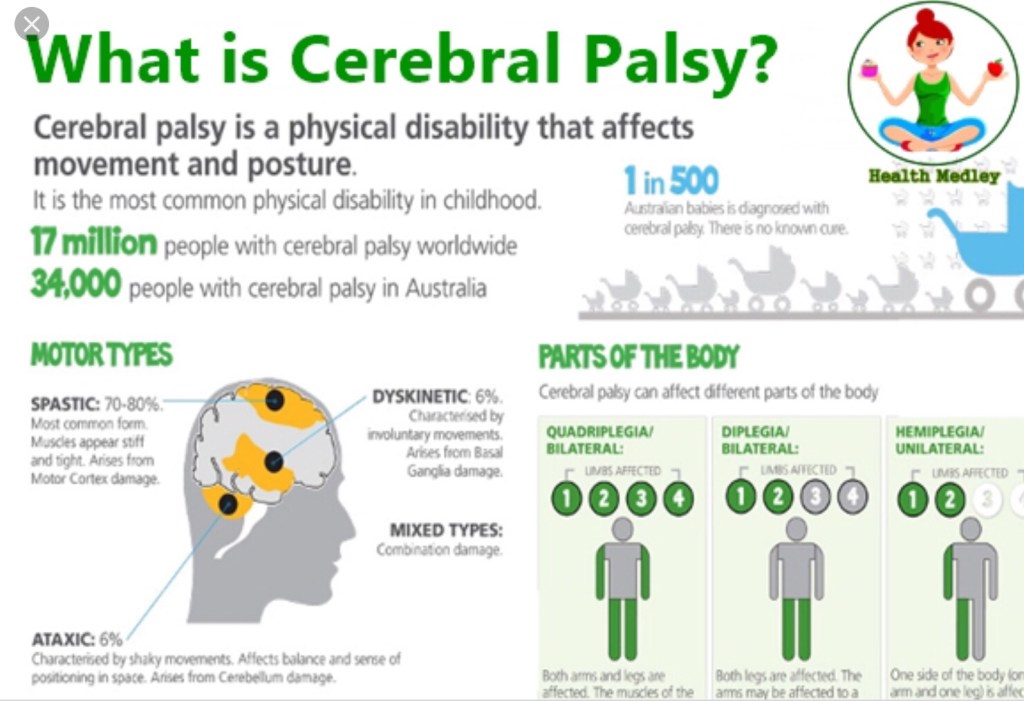
There are a few main types of CP. I’m not going to go into all of them or in to too much detail or I could be here all day. But they are:
Spastic Hemiplegia
Hemiplegia affects one side of the body. Will present in the same way as someone who has had a stroke. Depending on what side of the brain it affects, will determine what side of the body it will affect. Basically if it affects the left side of the brain, the right side of the body will be affected. So both the right arm and leg.
Spastic Quadriplegia
This affects all 4 limbs and has an increased muscle tone in both arms and legs.
Can affect the posture including how the head sits and the movement of the head too.
Spastic Diplegia
This refers to the leg spasticity and often to some degree effect the hand and /or arm. There is an increase in muscle tone in the leg muscles and the individual may have issues with co-ordination and strength. This can present asymmetrically too.
Ataxic CP
Ataxia is defined as failure of muscle co-ordination in particular irregular muscle action. This is sometimes sits alongside spastic Diplegia.
Ataxia is the result of a dysfunction of the cerebellum.
Individuals with CP will often have spasms and this will be different in everyone. For instance I will get spasms with sudden loud noises, being snuck up on especially from behind. It will cause the body to jolt. I will do so just once or twice but again this is different to the person with CP.
This current spell of cold weather has also affected those with CP. Cold weather stiffens the muscles and cause pain. It can cause more fatigue, struggling to get up and moving in the mornings, as well as making walking harder.
Exercise and CP go hand in hand, especially strength and conditioning training. I have personally seen improvement in my own cp with exercise. Better balance, I hardly face plant the floor any more unless I’m really concentrating on one thing or someone startles me or knocks me. I have become stronger and more flexible.
CP stiffens the muscles up and what exercise does is that it helps loosen them.
Exercise will benefit those with CP differently and the type of exercise will be different to the individual. So to me weight and body weight training is what suits me along with dance fitness! Zumba, Clubbercise and a dance – stretching class in the form of VeraFlow.
Some find yoga or Pilates is very beneficial, where others find swimming or horse riding, beneficial.
You also do not even need to leave the house to exercise especially with the amount you can see on social media, YouTube and even paid subscribed websites.

Those with CP I have worked with in the gym have gone on to prove exercise Is beneficial for their disability. I have been bought to tears watching them do movements medical professionals said they would never do. I can tell you there are no words to describe how that feels as a trainer, to see you helped that person achieve that. Also having CP myself they can relate to me more as I have been through similar experiences to them, but I can also say if I can do it, you can!

I always see the ability in all my clients and everyone out there needs to do the same. Disability often shows you are stronger, achieve more and always proving people wrong when they say ‘oh you can’t do that because you have a disability’.
People with disabilities are exactly the same as those who are able, same emotions, feelings. They want to fall in love & settle down and want to be social and do everyday activities.
It’s just the media have portrayed an image conscious world where if you don’t look perfect you don’t fit in, or you can’t fall in love with someone that doesn’t look perfect! Which is the completely wrong message to send out.

 InclusFit
Can you send me more information please for my daughter she has static hemiplegia on her left side so I can pass this on to her she won’t do it herself thank you
LikeLike